


As the days lengthen and the world outside bursts into bloom, the season of spring naturally invites a sense of renewal and tidiness. This urge to declutter and organize extends beyond our homes; it’s a powerful metaphor for how churches can approach their financial stewardship. Just as a thorough spring cleaning can prepare a space for brighter days, a dedicated review of your church’s financial records can unlock clarity, build trust, and empower your ministry to flourish. In a world where transparency and accountability are paramount, understanding where your church’s resources are coming from and going is not merely an administrative task-it’s a vital component of faithful stewardship, enabling your organization to better serve its congregation and fulfill its calling. This guide offers a step-by-step approach to help your church achieve financial clarity, ensuring its mission remains vibrant and sustainable.
The Deeper “Why”: Connecting Finances to Faith and Ministry
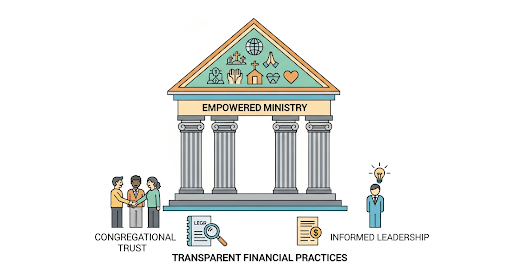
Sound financial stewardship is the foundation that supports congregational trust, informs leadership, and ultimately empowers the church’s ministry.
Financial health in a church setting transcends simple bookkeeping; it is intrinsically linked to faith and the effective execution of ministry. Stewardship, a cornerstone of many faith traditions, is the responsible management of all resources entrusted to us by God. When financial practices are clear and transparent, they reflect this spiritual discipline, honoring God and building trust with the congregation. This clarity allows leaders to make informed decisions, ensuring that funds are allocated effectively to support outreach programs, pastoral care, worship, and community engagement. By meticulously managing financial records, a church demonstrates its commitment to integrity, which can, in turn, foster increased generosity and deepen the congregation’s confidence in leadership. Ultimately, sound financial management isn’t just about balancing accounts; it’s about empowering the ministry to reach its full potential, spreading its message and impact further.
What You’ll Gain: Trust, Efficiency, and Sustainable Growth
Embarking on a financial spring cleaning offers tangible benefits that ripple throughout the entire church community. Primarily, it cultivates an environment of increased trust and accountability. When financial documents are well-organized and accessible, both leadership and the congregation can have greater confidence in how resources are being managed. This transparency reduces suspicion and fosters a sense of shared responsibility. Operationally, clear finances lead to enhanced efficiency. Streamlined processes for tracking income and expenses, managing accounts, and processing donations mean less time is spent on administrative guesswork and more time can be dedicated to core ministry activities. This efficiency directly contributes to sustainable growth. By understanding your church’s financial landscape, you can plan more effectively for the future, invest wisely in ministry initiatives, and build resilience against unforeseen challenges, ensuring the church’s mission can continue for years to come.
Step 1: Decluttering and Organizing Your Financial Records
The first step in achieving financial clarity is to systematically sort and organize your church’s financial documents. This process involves both physical and digital realms, ensuring that all essential information is accounted for and easily retrievable. Think of it as clearing out the old to make room for the new, preparing your church for a year of focused, transparent financial stewardship.
The Physical Purge: Sorting and Disposing of Paper Documents
Begin by gathering all physical financial records. This includes invoices, receipts, donation slips, deposit slips, and old financial statements. Create distinct piles for current year records, past years’ records, and materials to be archived or securely disposed of. The general rule for tax-related documents is to retain them for at least seven years, as recommended by many organizations and tax authorities. However, certain important documents, such as incorporation papers, bylaws, minutes of board meetings, and property deeds, should be kept indefinitely. For sensitive information that no longer needs to be retained, ensure it is shredded or securely disposed of to protect against identity theft or data breaches. This physical purge is crucial for reducing clutter and identifying exactly what information needs to be managed going forward.
Embracing Digital: Securely Storing and Accessing Information
Once the physical purge is complete, focus on digitizing and organizing your financial records. Scan all essential paper documents that need to be retained for future reference or legal purposes. Utilize secure cloud storage solutions or a robust internal server for digital archives. Implement a clear, logical filing system, perhaps by year, category (e.g., income, expenses, payroll), or specific ministry program. Ensure that access to these digital files is restricted to authorized personnel only, employing strong password policies and multi-factor authentication where possible. Regularly backing up your digital financial records is also paramount to prevent data loss. Embracing digital organization not only reduces physical clutter but also allows for quicker access to information, greatly enhancing efficiency.
Step 2: Scrutinizing Your Income, Expenses, and Accounts
With your financial records organized, the next crucial step is to thoroughly examine your church’s income, expenses, and accounts. This deep dive is where you uncover
patterns, identify discrepancies, and gain a clear picture of your church’s financial activity.
Reconciling Bank Statements and Ledgers
Reconciliation is the cornerstone of accurate financial management. This involves comparing your church’s internal financial records and budget with the official bank statements from all accounts, including checking, savings, and any credit cards. For each bank statement, meticulously match every transaction-deposits, withdrawals, checks written, electronic transfers, and credit card charges-against your church’s ledger or accounting software. Identify any discrepancies, such as outstanding checks that haven’t cleared or deposits that haven’t yet appeared on your statement. Investigating these differences promptly is key to ensuring the accuracy of your accounts. Performing this reconciliation monthly is a best practice that prevents small issues from snowballing into significant problems.
Analyzing Your Budget and Spending Habits
A key outcome of this process is the ability to analyze your church’s budget and spending habits. Compare the actual expenses incurred against the amounts allocated in your budget for each category. This comparison reveals areas where your church might be overspending or underspending. For instance, review subscriptions that may no longer be necessary or identify opportunities to negotiate better rates for utilities or services. Understanding these variances provides invaluable insight for future budget planning. It allows you to adjust your allocations to better reflect current needs and future ministry goals, ensuring your financial resources are utilized most effectively to support your mission.
Optimizing Giving Processes and Donor Management
Your church’s income primarily stems from the generosity of its congregation and donors. Spring cleaning is an ideal time to review and optimize your giving processes. Ensure your systems for receiving, recording, and acknowledging contributions are efficient and accurate. This includes streamlining online giving platforms, managing cash and check donations, and maintaining up-to-date donor records. Accurate financial records of giving are not only essential for transparency and stewardship but also for providing donors with appropriate receipts for tax purposes. Evaluating your donor management system ensures you are stewarding these relationships with care and professionalism, fostering continued support for your ministry.
Step 3: Fortifying for Your Church’s Financial Future
Once you have a clear understanding of your current financial standing, it’s time to focus on building resilience and preparing your church for future challenges and opportunities. This involves reviewing critical safeguards and planning strategically.
Assessing and Updating Insurance Coverage
Insurance is a vital component of protecting your church’s assets and operations. During your financial spring cleaning, conduct a thorough review of all your Insurance Policies. This includes general liability, property insurance (covering buildings and contents), Directors and Officers (D&O) liability for leadership, pastoral counseling liability, and any specialized coverage needed for specific ministry activities like youth camps or mission trips. Understand the terms of each policy, including coverage limits, deductibles, and exclusions. Ensure that your current coverage adequately reflects the church’s present risks and the scope of its ministry. An outdated or insufficient insurance plan can leave your organization vulnerable to significant financial loss in the event of an accident or claim.
Building and Protecting Cash Reserves and Assets
A financially healthy church needs adequate cash reserves to navigate unexpected circumstances and fund future initiatives. This is where establishing or bolstering an emergency fund becomes critical. This fund should be separate from operational cash and ideally cover three to six months of essential operating expenses. Review your current reserve levels and develop a plan to build them up over time, perhaps through dedicated fundraising efforts or by allocating a small percentage of unrestricted income. Additionally, assess how your church’s other assets-such as property, vehicles, or investments-are being managed and protected to ensure they effectively serve the ministry’s long-term objectives.
Ensuring Governance and Compliance
Strong governance and adherence to compliance standards are non-negotiable for any church organization. This involves ensuring your church’s bylaws and financial policies are up-to-date, clearly documented, and consistently followed. Review reporting requirements for your denomination, local authorities, and any grant-making bodies. Implementing clear separation of duties within your finance team can also be a crucial internal control, preventing any single individual from having unchecked authority over financial transactions and reducing the risk of fraud or error. Maintaining good governance builds trust and ensures your church operates with integrity and within legal frameworks.
Proactive Risk Assessment and Internal Controls
Beyond governance, a proactive approach to risk assessment and implementing robust internal controls is essential for safeguarding your church’s finances. Identify potential financial risks your organization may face, such as fraud, theft, financial mismanagement, or inaccuracies in financial records. For example, when using credit cards for church expenses, establish clear spending limits, require itemized receipts, and implement an approval process before charges are made. Regularly review credit card statements for unauthorized or questionable expenses. Implementing simple, practical controls-like requiring dual signatures on checks above a certain amount or establishing a clear expense reimbursement policy-can significantly mitigate these risks and protect the congregation’s offerings.
Maintaining Financial Clarity Year-Round
Spring cleaning is the starting point, not the endpoint. Sustained financial health requires ongoing discipline:
- Monthly: Reconcile all bank statements and credit card accounts
- Quarterly: Review budget versus actual expenses; flag variances before they accumulate
- Annually: Conduct a deep review of financial records, insurance policies, governance documents, and long-term financial planning
Training matters too. Your finance committee and administrative staff should be equipped with current knowledge of church-specific financial rules — not general accounting principles retrofitted for ministry use. The compliance landscape churches operate in is unlike any other organizational context, and the people managing your finances need to understand that distinction.
The Ongoing Benefits of Diligent Stewardship
Completing your church’s financial spring cleaning is more than a one-time event; it’s the beginning of a commitment to ongoing, diligent stewardship. The benefits-enhanced trust with your congregation, improved operational efficiency, and the capacity for sustainable ministry growth-are realized not just through a single audit, but through consistent, faithful management of resources. By making financial clarity a priority, your church strengthens its foundation, enabling it to be a more effective conduit for its mission and ministry.
Establishing Routines for Continuous Financial Health
To maintain the clarity achieved through your spring cleaning, establish consistent routines. This includes monthly reconciliation of all bank statements and credit cards, quarterly reviews of your budget against actual expenses, and annual deep dives into your overall financial records, Insurance Policies, and long-term financial planning. Implement regular training for your finance committee and administrative staff to ensure they are equipped with the knowledge and tools needed for accurate record-keeping and sound financial practices.
Next Steps for Continuous Improvement
As you move forward, consider seeking external expertise when necessary, whether it’s an auditor for an annual review, a financial advisor for strategic planning, or an insurance broker to ensure adequate coverage. Continue to educate your congregation about the importance of financial stewardship and the impact their contributions have on the ministry. By making financial health an ongoing conversation and a consistent practice, your church will be well-positioned to thrive, fulfilling its calling with confidence and clarity for years to come.
When the Complexity Outpaces Your Team’s Capacity
Many church finance teams are doing their best with limited staff, limited time, and financial rules that require specialized expertise most general accountants were never trained in. If your spring cleaning reveals gaps – in reconciliation discipline, in payroll accuracy, in compliance documentation – you’re not the only one.
At ChurchShield, we’ve found that nearly all of the churches that have their financial records reviewed for the first time have errors that need to be corrected. Almost always, those errors trace back to one source: records being managed under standard business practices rather than church-specific law. The rules governing ministerial compensation, housing allowances, FICA exemptions, and restricted fund management are distinct – and getting them wrong has real consequences for your staff and your organization.
ChurchShield is a faith-based firm with over 100 years of combined team experience, built specifically to serve churches and ministries of all sizes. Our team of degreed accountants and compliance professionals provides fully outsourced accounting, payroll, HR, clergy tax, and IRS compliance services – all designed around the unique financial landscape churches navigate every day. Many of our clients have been with us for 15 years or more. That’s not a transaction; it’s a partnership.
Free to minister. That’s the goal. Let ChurchShield get you there.
Learn more about ChurchShield’s church accounting services →
Recent Comments